Lerne Scalpen
Der interaktive Orderflow-Kurs, mit dem du den Markt direkt im Orderbook verstehen lernst — Schritt für Schritt, mit echten Beispielen.
| PREIS | VP | LIMIT BUY | MARKET SELL | MARKET BUY | LIMIT SELL |
|---|---|---|---|---|---|
| 104'250 | — | — | — | — | 2'528 |
| 104'245 | — | — | — | — | 2'654 |
| 104'240 | 2'708 | — | — | — | 2'875 |
| 104'235 | 8'108 | — | — | — | 2'709 |
| 104'230 | — | — | — | — | 2'944 |
| 104'225 | 13'913 | — | — | — | — |
| 104'220 | 23'263 | 2'535 | — | — | — |
| 104'195 | 27'179 | 2'701 | — | — | — |
Verstehe den Markt
Verstehe, wie man professionell arbeitet
Lerne, den Orderbook zu lesen und deinen Vorteil zu finden
Erhalte 5 Strategien
Mit Bildern, Videos und einem Orderbook-Simulator, um die Technik zu verstehen
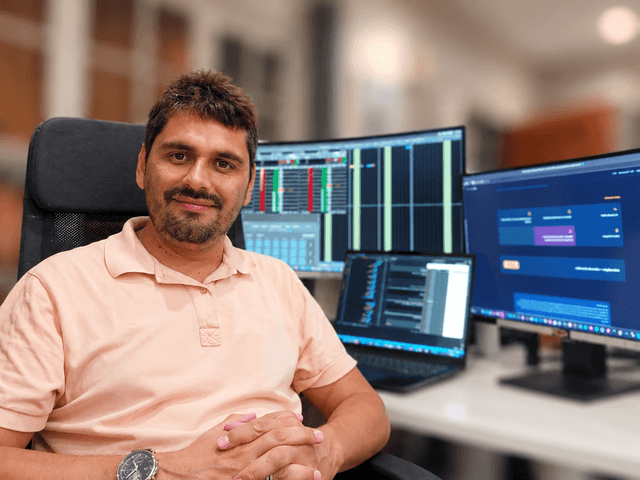
Carlos Weber
Gründer von Treasurybias · Im Trading seit 2011, im Orderbook seit 2018
Schweizer Herkunft, lebt heute mit seiner Familie in Spanien. Neben dem Trading entwickelt er als Programmierer Software und Webapplikationen für Kunden.
Mehr über mich erfahren →Ein kompletter Kurs für den Orderflow-Handel
Welche Märkte
US-Treasury-Futures ZN (10-Jahre), ZB (30-Jahre) und ZF (5-Jahre) an der CME — die Instrumente, die du im Kurs handeln lernst.
Plattformen & Tools, die ich selbst nutze und empfehle






Keine Zusammenarbeit, kein Sponsoring, keine Partnerschaft mit diesen Firmen — nur Tools, die ich selbst nutze und empfehle.
RISIKOHINWEIS
Der Handel mit Futures und Aktien birgt erhebliche Risiken und ist nicht für jeden Anleger geeignet. Die Informationen auf dieser Website dienen ausschliesslich Bildungszwecken. Es handelt sich nicht um eine Aufforderung oder Empfehlung, Wertpapiere, Futures-Kontrakte oder Optionen zu kaufen, zu verkaufen oder zu halten. Ein Anleger kann sein gesamtes eingesetztes Kapital oder mehr verlieren. Risikokapital ist Geld, dessen Verlust die finanzielle Sicherheit oder den Lebensstandard einer Person nicht gefährdet. Für den Handel sollte ausschliesslich Risikokapital eingesetzt werden. Vergangene Wertentwicklungen sind kein Hinweis auf zukünftige Ergebnisse.
Alle Zeiten, News und Kursniveaus werden ohne Gewähr bereitgestellt und können von Drittquellen stammen. Es wird keine Haftung für Richtigkeit, Vollständigkeit oder Aktualität übernommen — bitte immer mit dem eigenen Broker/Datenanbieter abgleichen.